Sizing for humidity
The rule of thumb that gives one ton of cooling for every five hundred or six hundred square feet is how a lot of houses here ended up with oversized systems. An oversized air conditioner cools the air fast, hits the thermostat setting and shuts off before it has run long enough to pull moisture out. In a West Alabama summer, that leaves rooms cold and damp, with a musty smell and a power bill that does not match the comfort.
We size by a load calculation instead, the Manual J method, which accounts for insulation, windows and which way they face, ceiling height, air leakage, duct location and the local design conditions. A brick house with big oaks on the west side and a two-story vinyl house on an open lot can be the same square footage and need different equipment.
Ductwork is part of sizing too. The system can only deliver what the ducts can carry, so a correctly sized unit on a return that is too small will still run loud and short of air. The load calculation tells us what the house needs, and the duct check tells us whether the house can take it.
Getting the size right is also why variable-speed and two-stage systems are worth asking about here. They run longer at low speed, which is exactly what pulls humidity down, and they short cycle less.
Efficiency ratings, plainly
SEER2 is the cooling efficiency rating on new air conditioners and heat pumps, the updated version of the old SEER number using a tougher test. Higher means less electricity for the same cooling. Since 2023, the minimum for most new split systems sold in the Southeast is 14.3 SEER2, and heat pumps have a matching heating rating called HSPF2.
Whether a higher-rated unit pays you back depends on how much you run it, and in Tuscaloosa you run it a lot: most of the day for about four months, and more if it is a heat pump doing heating too. A step up from the minimum often makes sense here. The very top tier sometimes does not, unless you plan to stay in the house a long time. We put two or three options in writing so you can see the difference rather than take our word for it.
If the old system is a heat pump, the new one usually should be too. The comparison for a heat pump replacement runs along the same lines, with the heating rating added, and since it heats the house too, the payback usually comes faster.
Ductwork and airflow
A new system on bad ducts performs like an old system. Older homes near the university and in Alberta and Forest Lake often still have the original ductwork, sometimes on its second or third system, with crushed flex runs in the attic, disconnected joints and returns that are too small. In humid weather, leaky ducts in an unconditioned attic pull in hot, wet air, and duct mold follows.
We check the ducts as part of any replacement quote: static pressure, the condition of the runs, the return size and the seal at every connection we can reach. Sometimes that means sealing and fixing a few runs. Sometimes it means replacing the trunk or the whole system of ducts. Either way, you see it in the quote as its own line, not buried in the equipment.
Newer subdivision homes have their own duct habits. Builders often run flex duct through the attic with long, sagging runs and tight bends that cut airflow, and returns placed in a hallway that cannot pull enough air from the bedrooms with the doors closed. Those houses usually do not need new ducts so much as straighter, shorter runs, a few added returns or jumper ducts, and a proper seal at the boots and the plenum.
Install day
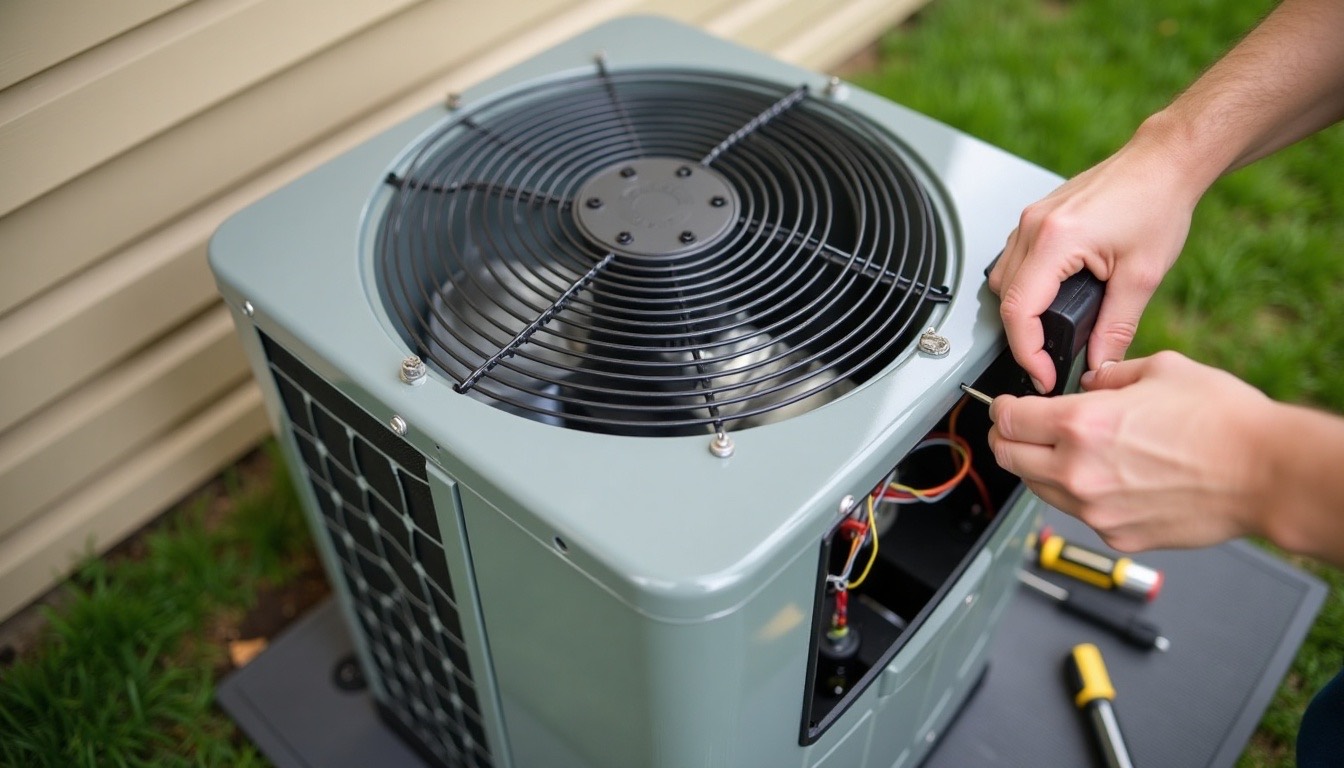
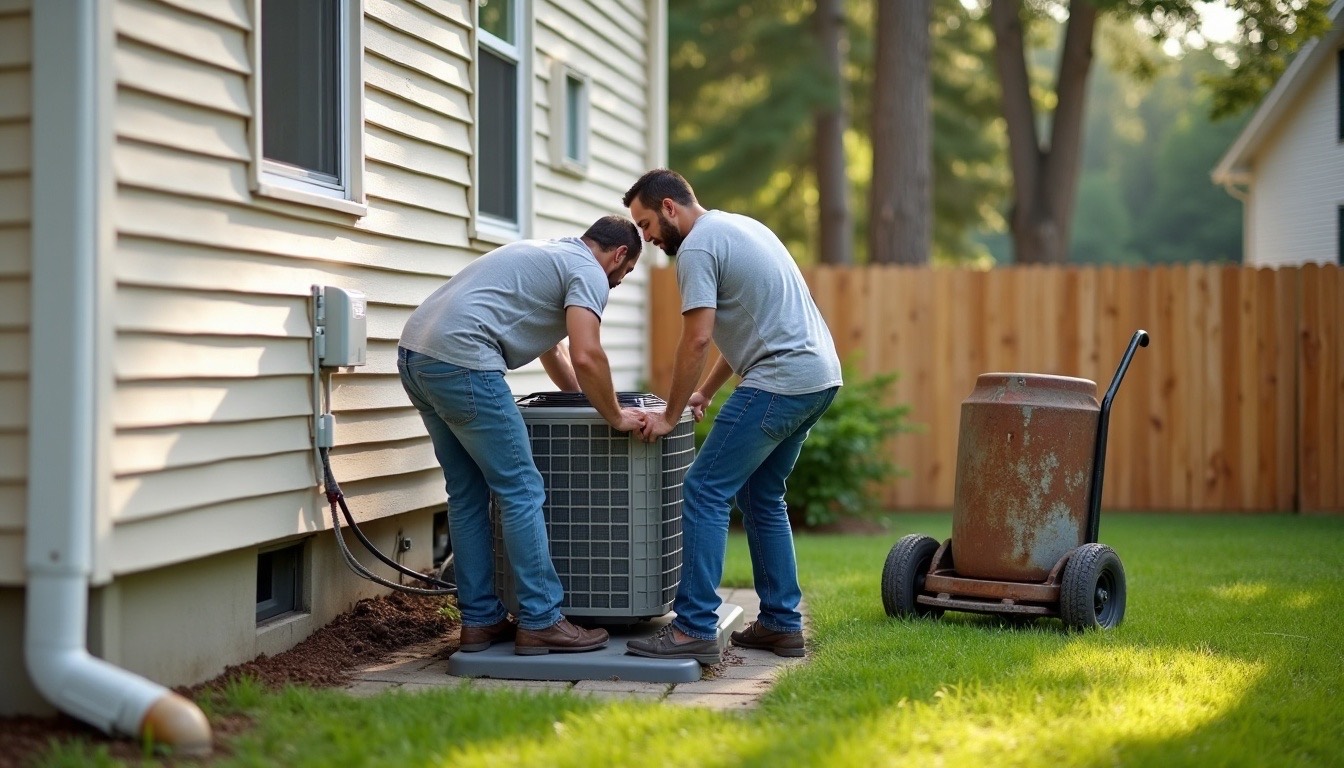
Most straight replacements take a day. The crew recovers the refrigerant from the old system instead of venting it, disconnects and hauls off the old equipment, sets the new outdoor unit on a level pad, and replaces or cleans the line set depending on its condition and the refrigerant type. Indoors, the coil and air handler or furnace get set, the condensate drain gets a proper trap, slope and float switch, and the electrical gets checked down to the disconnect.
Before anyone leaves, the system is pressure tested, evacuated with a vacuum pump to pull out moisture, charged to the manufacturer's spec, and run in both modes if it is a heat pump. The thermostat is set to match the equipment, and you get a walk-through of the filter, the drain and the paperwork for the warranty registration.
Permits and inspections, where the city or county requires them, are handled as part of the job. The old refrigerant is recovered into a tank and the old metal goes to a recycler instead of a ditch. If the new equipment is going somewhere different from the old, such as an attic unit moving to a closet, we walk you through that before the install day, not during it.