What we check first
- Before gauges come out, the cheap stuff gets ruled out. Is the thermostat calling for cooling and set to cool, not fan or heat? Is the breaker on, and the disconnect by the outdoor unit pulled in? Is the filter clean enough to pass air? A filter packed with spring pollen can starve the indoor coil until it freezes, and no amount of refrigerant fixes that.
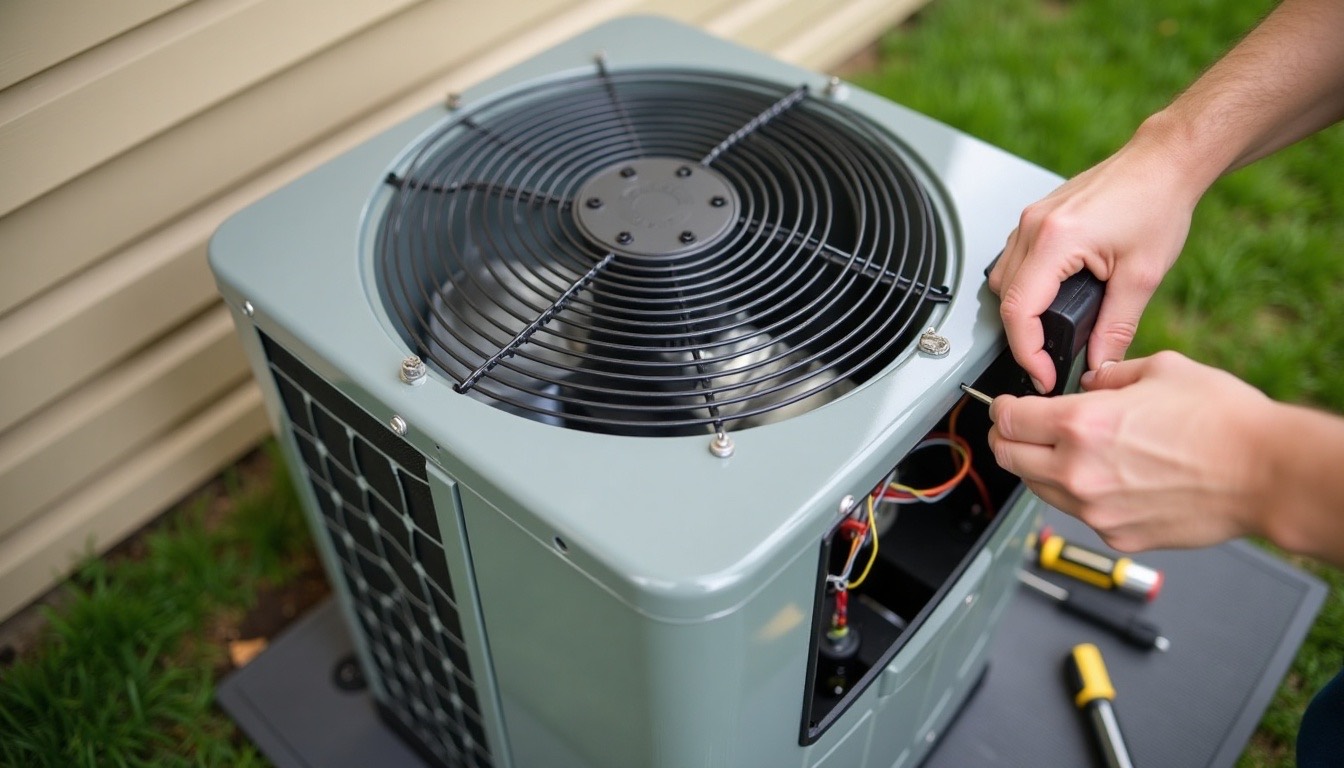
- Then the outdoor unit. With the power off, the tech checks the capacitor with a meter rather than by eye, looks at the contactor points for pitting and burn marks, and checks the fan motor and wiring for heat damage or chewed insulation. With power on, he reads refrigerant pressures and the temperature split across the indoor coil, which tells you whether the system is moving heat or just moving air.
- Some people ask about the three minute rule. It means waiting a few minutes after the unit shuts off before restarting it so the compressor is not trying to start against high pressure. Most modern thermostats build that delay in. If your unit trips a breaker every time it restarts, that is a sign of a weak capacitor or a compressor that is struggling, and it is worth a look rather than another reset.
After a storm or a surge
Spring storms roll through West Alabama with lightning and flickering power, and a surge or a brownout is hard on the electrical parts in an outdoor unit. Capacitors bulge or fail open, contactor coils burn, and control boards on newer systems can lose a fuse or a relay. The pattern we see: the power comes back on, the lights are fine, and the AC is not.
Most storm failures are a same-visit repair because the parts are common and come on the truck. A whole-house surge protector or a plug-in protector at the outdoor disconnect will not stop every strike, but it takes the edge off the ordinary flickers that slowly wear down a capacitor. What the tech looks for after replacing a capacitor is why it failed. Sometimes it was just the surge. Sometimes the fan motor bearings are dragging and cooked the capacitor slowly, and if that is the case you hear about it, because a new capacitor on a failing motor lasts a few weeks.
Refrigerant leaks and R-22
An air conditioner does not use up refrigerant. If it is low, it leaked. The usual spots are the indoor evaporator coil, the service valves, flare fittings on mini splits, and copper lines rubbing against a wall or a pad. A system that slowly loses cooling over a few weeks, ices up at the indoor coil or the suction line, and runs without ever shutting off is the textbook case.
Topping off a leaking system and walking away is the repair that keeps people calling back. We find the leak first with electronic detection or bubble tests, tell you where it is and whether it can be fixed at a fitting or means a coil, and then talk about the charge.
Older units still running R-22 are a different conversation. Production of R-22 stopped in 2020 under the EPA's phaseout of HCFC refrigerants, and what is left comes from recovered and recycled supply, so each recharge costs more than it used to. On a unit that age with a real leak, the repair can be worth it for a coil swap or a fitting. When it isn't, we walk through the replace side of that decision with you.
Humidity and drain lines
In a Tuscaloosa summer an air conditioner pulls gallons of water out of the house air every day. That water runs off the indoor coil into a pan and out a condensate drain line, usually PVC that exits near the outdoor unit or into a plumbing drain. Algae and dust grow in that line in the warm, wet months, and when it clogs, the water has to go somewhere.
If the system has a float switch, the AC shuts off and the house heats up with no obvious reason. If it doesn't, water backs up into the ceiling of a hall closet or the floor of an attic unit, and you find out from a stain. We clear the line, flush the pan, check the slope and the trap, and add or test a float switch so the next clog stops the system instead of soaking the drywall.
Short cycling makes all of this worse. A unit that starts and stops every few minutes, often because it is oversized for the house, cools the air without running long enough to wring the moisture out. Homes near the lake and the river feel that as a musty smell and damp air even when the thermostat is happy. Regular cleaning helps, and so does a tune-up before pollen season, when a lot of these problems start.
Related
AC Installation and Replacement
SEER2 explained plainly, ducts checked, and a written price up front.